
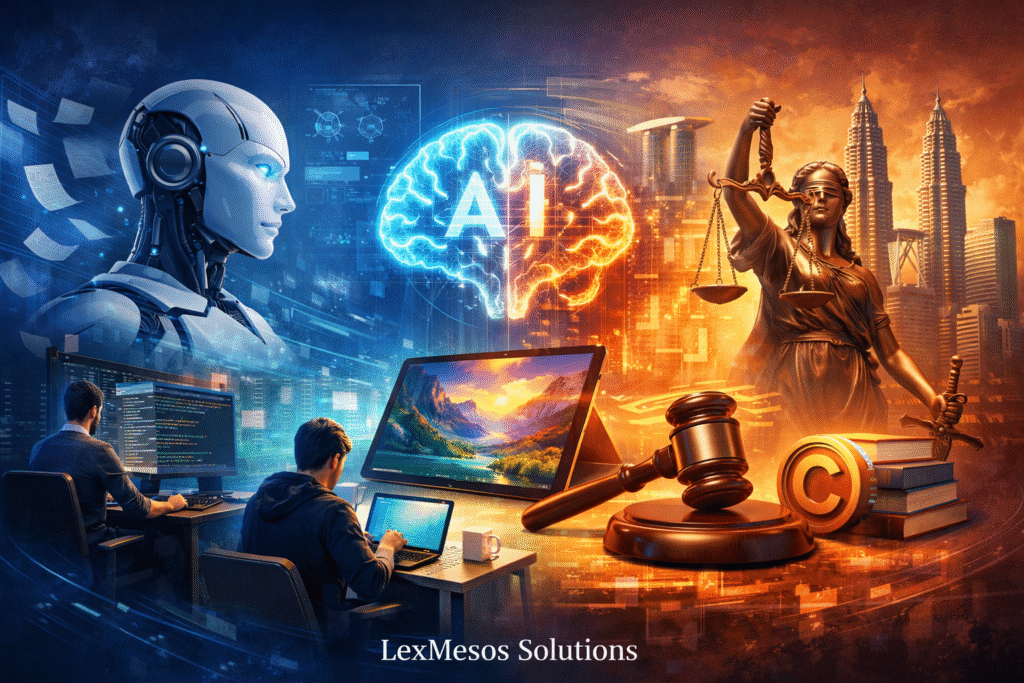
AI can now generate stunning images in seconds.
But the real question is not about creativity, it’s about ownership.
If an image is created by AI, who owns it?
• The developer who built the system?
• The user who typed the prompt?
• Or the AI itself?
The answer right now is uncomfortable:
👉 there is no clear global answer.
The Core Problem: Copyright Was Built for Humans
Most copyright laws are based on one simple idea:
👉 a human author creates the work
That is where AI breaks the system.
In many jurisdictions:
• copyright requires human creativity
• purely AI-generated works may not qualify for protection at all
This means:
👉 if AI creates something without meaningful human input, it may legally belong to no one
So Who Owns AI-Generated Content?
There are currently three main views:
1. The Human User
If the user:
• writes prompts
• selects outputs
• edits the result
Then the work may be considered AI-assisted, and the human may claim ownership.
👉 This is the most practical approach today.
2. The Developer
Some argue the AI developer owns the output.
But this is weak legally because:
• developers did not create the specific content
• they only built the tool
3. No One
If the work is fully AI-generated with minimal human input:
👉 no copyright protection applies
This is becoming a real possibility in many jurisdictions.
The Hidden Issue: Training Data
Ownership is only one side of the problem.
The bigger issue is:
👉 AI is trained on existing copyrighted works
This creates risks:
• use of content without permission
• potential infringement
• lack of transparency
This is why regulators (especially in Europe) are starting to focus on:
• training data disclosure
• copyright compliance
🇸🇬 Singapore: Ahead, But Still Cautious
Singapore is often seen as one of the first in Asia to move towards AI and legal tech.
Through initiatives like the Model AI Governance Framework, Singapore promotes:
• transparency
• accountability
• responsible AI use
But when it comes to IP:
👉 Singapore still follows a human-centric approach
• AI is treated as a tool
• copyright still requires human authorship
Even in a tech-forward system:
👉 AI is not recognised as an author
Are Singapore courts using AI?
Yes, but carefully.
• digital courts
• e-filing
• automated systems
But:
👉 AI does not replace judges
👉 it only assists
What makes Singapore different?
Singapore doesn’t rush.
Instead, it:
• prepares early
• builds frameworks
• guides adoption
👉 The system evolves with control, not hype.
🇲🇾 Malaysia: Still Catching Up
Malaysia is still at an early stage.
Current law:
• based on the Copyright Act 1987
• designed for human creators
At the moment:
• AI is treated as a tool
• no clear rules on fully AI-generated works
Is Malaysia ready?
👉 Not fully.
Challenges include:
• lack of clear ownership rules
• limited regulatory guidance
• slower adoption of legal tech
Malaysia is observing global developments, but has not yet taken a strong position.
Final Thought
Even advanced systems like Singapore
have not fully answered this question:
👉 Who owns AI-generated content?
This tells us one thing clearly:
👉 AI is moving faster than the law
And for now, the legal system is still trying to catch up.
Keywords: AI copyright, AI-generated images ownership, intellectual property AI, AI authorship law, who owns AI content, AI legal issues, copyright AI Malaysia, AI law Singapore, AI-generated content rights, AI training data copyright, AI legal compliance, digital compliance AI
31 March 2026