 Skip to content
Imagine this.
You get fired.
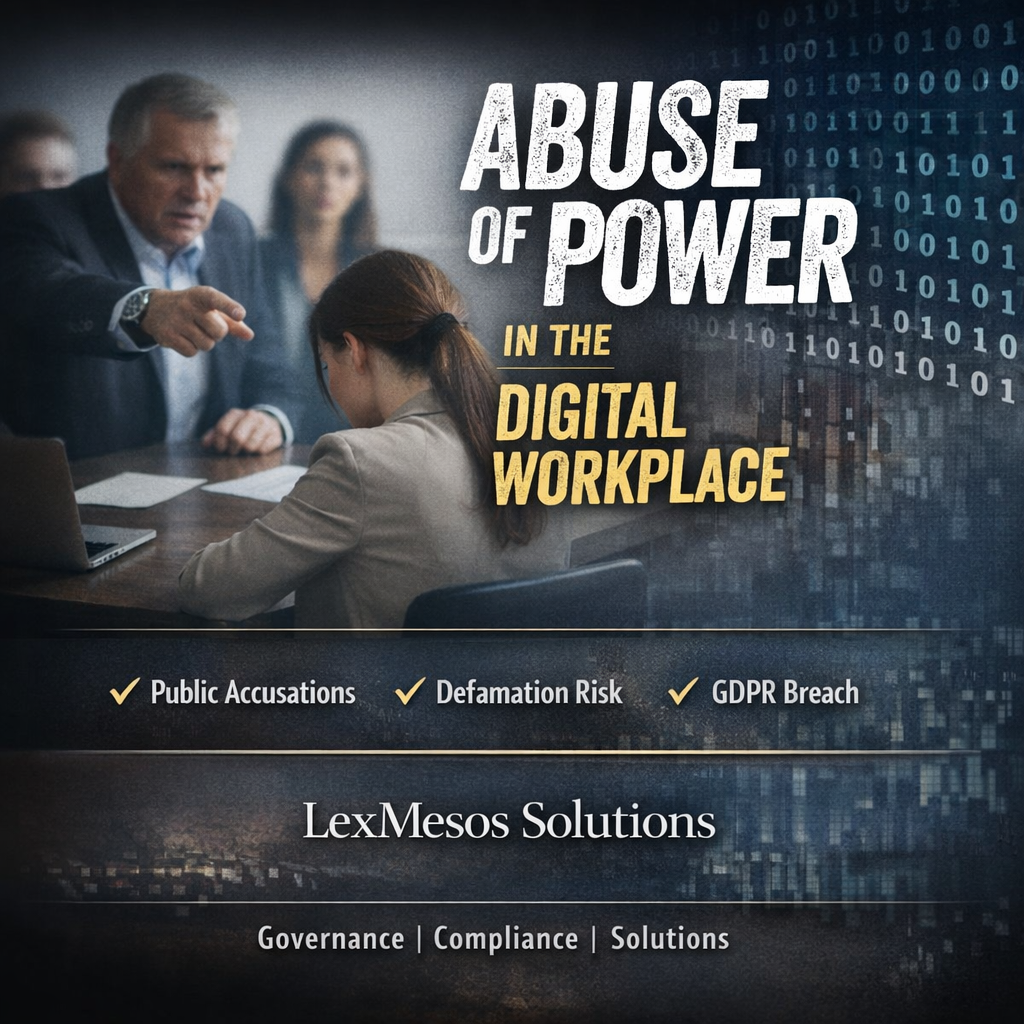
Before you can respond, a senior leader posts on the company channel:
“He lied.”
Not privately.
Not through HR.
But in front of everyone.
This is no longer just a workplace issue.
This is about ethics, power and control in the digital workplace.
This Is Where Leadership Becomes Risk
A Chief or Director is not just managing people,
they are expected to uphold judgement, fairness and accountability.
When authority is used to publicly label an employee, especially without due process, it raises a serious question:
👉 Is this leadership or misuse of position?
The Digital Workplace Has No “Undo”
Today’s workplace is digital.
That means:
• Messages are recorded
• Posts are screenshot
• Statements spread instantly
What feels like a quick comment can become:
👉 a permanent record
👉 a reputational issue
👉 a legal problem
When Conduct Turns Into Legal Exposure
Actions like these may not just be inappropriate,
they may carry real legal consequences, depending on the facts.
They can potentially amount to:
• Defamation — if a false statement harms reputation
• Libel — where the statement is written or published
• Slander — if similar accusations are repeated verbally
• Breach of internal code of conduct — including leadership ethics policies
• Breach of confidentiality obligations — relating to HR processes
• Data protection violations, including under the General Data Protection Regulation (“GDPR”) where personal or disciplinary information is disclosed
Not every situation will meet the legal threshold,
but THE RISK iS REAL.
Director-Level Responsibility: Training Is Not Optional
This is where governance matters.
Senior management should be properly trained on:
• What can be said
• What must remain confidential
• When to escalate to HR or Legal
Because at that level:
👉 one sentence can trigger multiple layers of risk
If unsure, ask the HR or Legal.
How Employees Can Protect Themselves
In these situations, employees should act carefully and practically:
• Keep evidence (screenshots, messages, timelines)
• Document everything clearly
• Respond professionally, if needed
• Seek legal advice where appropriate
A Simple Standard
Authority should never be used to:
• Publicly shame
• Control a narrative unfairly
• Or expose internal matters unnecessarily
Good leadership is not about saying more.
it is about knowing what not to say.
Final Thought
In the digital workplace, every message reflects more than intent.
it reflects judgement, ethics and control.
Sometimes, the biggest risk is not the employee’s conduct,
but how leadership chooses to respond.
Not sure if your current policies and communication practices are strong enough?
It may be time to review and strengthen them before risks arise.
Explore our compliance support services at LexMesos Solutions.
A practical approach to compliance, governance and internal controls- beyond traditional legal services.
Keywords: workplace defamation, digital workplace ethics, abuse of power workplace, employer liability employee reputation, GDPR employee data breach, leadership communication risk, corporate governance workplace, public accusation employee, workplace misconduct management, internal disciplinary confidentiality
2 April 2026