 Skip to content

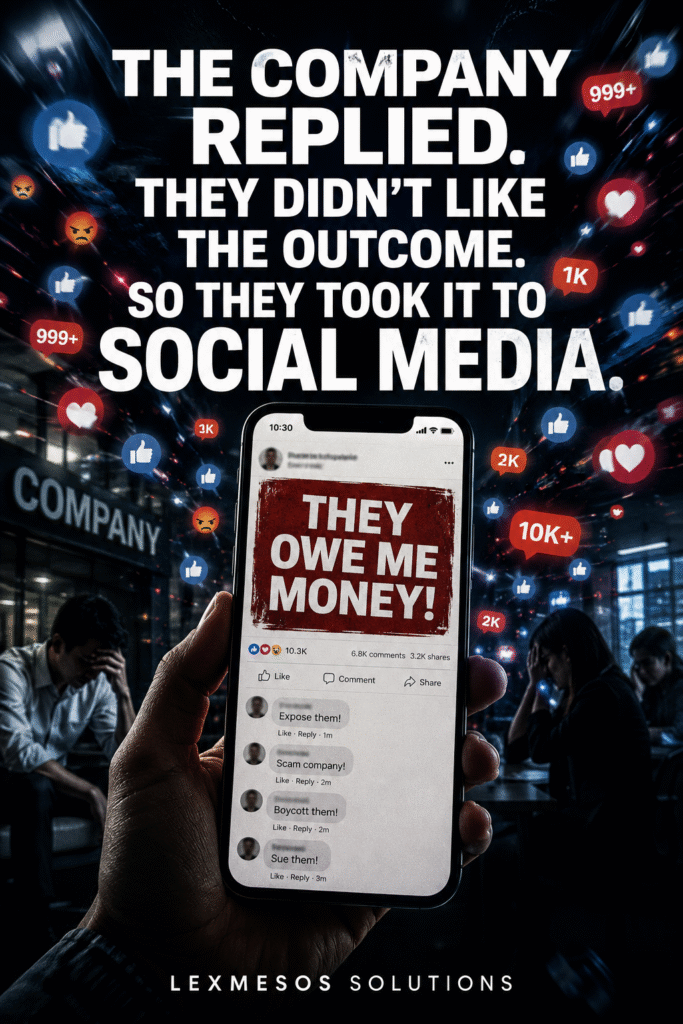
When does a public complaint become a legal risk?
Every day, businesses receive complaints.
A customer requests a refund.
An affiliate claims they earned a commission.
A referral partner believes they are entitled to a reward.
A collaboration ends badly.
The company investigates.
The company responds.
Sometimes, the answer is “Yes.”
Sometimes, it is “No.”
Sometimes, it is “Not under the agreed terms.”
And that is where many disputes begin.
Not because the company ignored the complaint.
Not because nobody replied.
But because one party simply did not agree with the outcome.
Instead of continuing discussions privately, the dispute moves somewhere else.
Facebook.
TikTok.
Instagram.
X.
LinkedIn.
Xiaohongshu.
Google Reviews.
The company is tagged.
Its directors and managers involved are tagged.
Sometimes even its employees become part of the online discussion.
Within hours, thousands of strangers are judging a dispute they know very little about.
But before pressing “Post”, perhaps we should ask a different question.
Is social media the right place to resolve a business dispute?
Not Every Dispute Means Someone Is Wrong
One of the biggest mistakes people make is assuming that every disagreement means someone acted dishonestly.
Reality is rarely that simple.
An affiliate may believe they have earned a commission.
The company may believe the qualifying conditions were never met.
A customer may believe they deserve a refund.
The business may rely on its published terms and conditions.
A referral partner may believe they introduced the client.
The company may conclude that the customer came through another marketing channel.
Both sides may genuinely believe they are right.
Disagreement alone does not automatically mean fraud, dishonesty or bad faith.
Sometimes, it simply means both parties interpret the facts or the agreement differently.
A Legal Relationship Can Exist Even Without Employment
Many people assume that because they are “just an affiliate” or “only a referral partner”, they have no legal relationship with the company.
That is not necessarily correct.
A legal relationship does not require an employment contract.
It may arise through:
- affiliate programmes;
- referral arrangements;
- commission agreements;
- influencer collaborations;
- online platform terms and conditions;
- emails confirming an agreement; or
- other contractual arrangements.
The rights of each party usually depend on what was agreed.
That is why written terms matter.
Should Every Dispute Go Straight to Social Media?
Social media has changed the way people complain.
Years ago, most disputes started with a letter, an email or a phone call.
Today, many begin with a Facebook post.
Sometimes, public attention encourages businesses to respond more quickly.
In other situations, however, the business has already investigated the complaint and provided an explanation.
The complainant simply disagrees with the decision.
That raises an important question.
Should every disagreement become a public dispute?
There is no single answer.
But before posting online, it may be worth asking:
- Have I understood the terms and conditions?
- Have I kept records of the communications?
- Have I allowed a reasonable opportunity for the issue to be reviewed?
- Am I presenting facts or assumptions?
- Could there be information I do not yet know?
These questions do not prevent someone from speaking.
They encourage responsible communication.
Can You Complain About a Company on Social Media?
Many people assume that if they genuinely believe they were treated unfairly, they can say anything online.
The legal position is often more nuanced.
People may be entitled to share genuine experiences or honestly held opinions.
However, legal risks may arise depending on the circumstances, including where:
- factual allegations are inaccurate or cannot be substantiated;
- confidential information is disclosed;
- contractual confidentiality obligations are breached;
- personal information about employees or third parties is published without justification;
- statements become defamatory under the applicable law.
Every case depends on its own facts.
There is no universal rule that every public complaint is lawful.
Nor is every criticism unlawful.
Social Media Can Solve Problems Or Create New Ones
A single post can reach thousands of people within minutes.
Sometimes, it encourages a business to investigate further.
Sometimes, it damages reputations before all the facts are known.
Sometimes, it affects employees who had no involvement in the dispute.
Sometimes, the post itself later becomes part of legal proceedings.
Likewise, businesses should also avoid reacting emotionally.
Threatening legal action against every unhappy customer or affiliate rarely helps.
Professional communication and a fair review process often lead to better outcomes than public arguments.
Businesses Also Have Responsibilities
This discussion is not only about complainants.
Businesses should also ask themselves:
Were the commission terms clearly explained?
Were the qualifying conditions transparent?
Was the complaint acknowledged promptly?
Was the outcome explained clearly and respectfully?
Was there an internal review process?
Many public disputes begin not because someone intended to act unfairly.
They begin because expectations were never properly managed.
Clear Agreements Prevent Expensive Disputes
Whether you are a business, affiliate, referral partner or influencer, prevention is usually better than damage control.
Well-prepared documentation can reduce misunderstandings before they become public disputes.
This may include:
- Affiliate Agreements
- Referral Agreements
- Commission Agreements
- Collaboration Agreements
- Influencer Agreements
- Clear Terms and Conditions
- Confidentiality Clauses
- Dispute Resolution Clauses
- Communication Procedures
A written agreement cannot eliminate every disagreement.
But it often makes resolving disagreements much easier.
Final Thoughts
Social media has given everyone a voice.
That is not necessarily a bad thing.
It has helped expose genuine misconduct, improve customer service and hold organisations accountable.
At the same time, every public post carries responsibilities as well as rights.
Whether you are a customer, affiliate, referral partner or business owner, it is worth remembering that not every disagreement means someone has acted unlawfully and not every dispute is best resolved online.
Before pressing “Post”, ask yourself three simple questions:
Have I understood the facts?
Have I given the other party a reasonable opportunity to respond?
Am I helping to resolve the dispute or simply making it public?
Sometimes, the answer changes everything.
Need Clear Business Documents Before Problems Arise?
Many disputes begin with unclear expectations rather than bad intentions. Whether you need an affiliate agreement, referral agreement, commission agreement, collaboration agreement or other business documents, clear drafting can help reduce misunderstandings and support stronger business relationships.
Keywords: social media complaints, business disputes, affiliate agreements, referral agreements, commission disputes, collaboration agreements, online reviews, customer complaints, influencer agreements, contract drafting, confidentiality clauses, non-disparagement clauses, defamation awareness, dispute resolution, business governance, AI document drafting, commercial agreements, reputation management, Malaysia business awareness
14 July 2026
Disclaimer: This article provides general legal awareness only and should not be treated as legal advice. The outcome of any dispute depends on its specific facts, the terms of any applicable agreement and the laws of the relevant jurisdiction.