 Skip to content

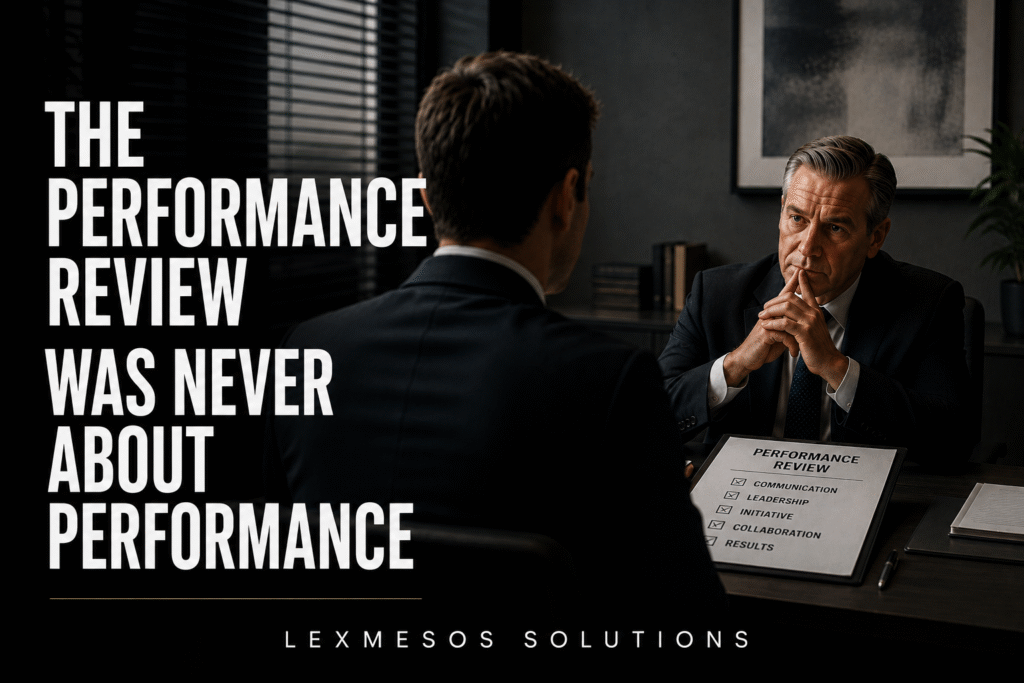
Performance reviews are supposed to be simple.
Targets are set.
Results are measured.
Achievements are recognised.
Ratings are assigned.
At least, that is how the process is intended to work.
Yet many employees leave performance appraisal meetings feeling confused.
Not because they disagree with every piece of feedback.
But because the final outcome does not seem to reflect the work they actually performed.
Sometimes the question is not:
“How did I perform?”
The question becomes:
“Was this review really about performance?”
When The Numbers Tell One Story
Many organisations rely on performance indicators to measure results.
Sales targets.
Project completion rates.
Operational efficiency.
Customer satisfaction scores.
Revenue generation.
Productivity metrics.
Employees often spend months working towards these objectives.
They solve problems.
Support customers.
Meet deadlines.
Handle difficult situations.
Contribute to business growth.
On paper, the results appear strong.
Yet appraisal discussions sometimes focus on something else entirely.
When The Conversation Changes
In some workplaces, performance reviews gradually move away from measurable results.
The focus shifts to subjective factors such as:
- attitude;
- communication style;
- teamwork;
- leadership potential;
- cultural fit;
- stakeholder relationships.
These factors can be important.
No organisation can operate successfully without collaboration and professionalism.
However, employees often become concerned when subjective assessments appear to outweigh objective achievements.
Especially when performance targets have been achieved or exceeded.
The employee starts wondering:
Did my performance change?
Or did the narrative change?
The Uncomfortable Reality Of Workplace Politics
Every organisation consists of people.
And wherever people exist, workplace politics can exist too.
Relationships influence perceptions.
Perceptions influence decisions.
Decisions influence outcomes.
An employee may challenge a decision.
Raise a concern.
Question a process.
Disagree with a manager.
Highlight operational issues.
Months later, performance review season arrives.
No direct connection is made.
Nothing is openly discussed.
Yet the employee begins to question whether the appraisal is assessing performance or something else.
Whether this perception is accurate or not, it can significantly affect trust in the process.
When Silence Becomes A Survival Strategy
Employees rarely fear fair assessments.
What many employees fear is an assessment that was influenced before it began.
When employees believe that speaking up may affect future opportunities, behaviour changes.
People stop challenging decisions.
People stop reporting concerns.
People stop questioning inefficient processes.
People stop offering honest feedback.
Not because the problems disappear.
But because remaining silent feels safer.
Over time, silence becomes a workplace survival strategy.
Unfortunately, organisations often lose valuable insights when employees stop speaking.
The Cost Of Losing Trust
A performance review is more than an annual exercise.
It is a signal.
It tells employees what the organisation values.
When employees believe performance is recognised fairly, trust grows.
When employees believe outcomes are influenced by factors unrelated to performance, trust begins to disappear.
The consequences can be significant:
- lower employee engagement;
- reduced motivation;
- increased turnover;
- less innovation;
- fewer concerns being raised;
- weaker organisational culture.
The cost of a broken appraisal process is not simply dissatisfaction.
It is the gradual erosion of trust.
Can Performance Reviews Ever Be Completely Objective?
Probably not.
Performance appraisals involve human judgement.
Human judgement naturally includes perceptions, experiences and opinions.
The goal is therefore not perfection.
The goal is fairness.
Employees are more likely to trust the process when organisations:
✔ Use measurable performance indicators where possible
✔ Document achievements throughout the year
✔ Apply consistent criteria across teams
✔ Separate performance concerns from personal disagreements
✔ Encourage open discussions about ratings
✔ Support decisions with evidence rather than assumptions
Transparency does not guarantee agreement.
But it helps build confidence.
What Employees Can Do
Employees cannot control office politics.
However, they can control how they manage their own records.
Practical steps include:
- tracking achievements and completed projects;
- keeping records of targets achieved;
- documenting positive feedback;
- confirming important discussions in writing where appropriate;
- remaining professional during disagreements.
When performance discussions arise, documented evidence is often more persuasive than memory alone.
Final Thought
Most employees do not expect perfect workplaces.
Most employees do not expect perfect managers.
Most employees do not even expect perfect performance reviews.
What they expect is a fair opportunity to be assessed based on their actual contribution.
A performance review should evaluate performance.
It should not reward silence.
It should not discourage employees from raising legitimate concerns.
And it should not leave employees wondering whether the outcome was decided before the conversation even began.
Because once employees lose confidence in the process, trust becomes far more difficult to rebuild than any annual rating.
Employees rarely fear fair reviews.
They fear reviews that no longer feel fair.
Keywords: performance review, performance appraisal, workplace culture, office politics, employee engagement, employee performance, HR processes, management accountability, leadership, workplace governance, employee trust, performance ratings, workplace fairness, corporate culture, employee relations
20 June 2026