 Skip to content

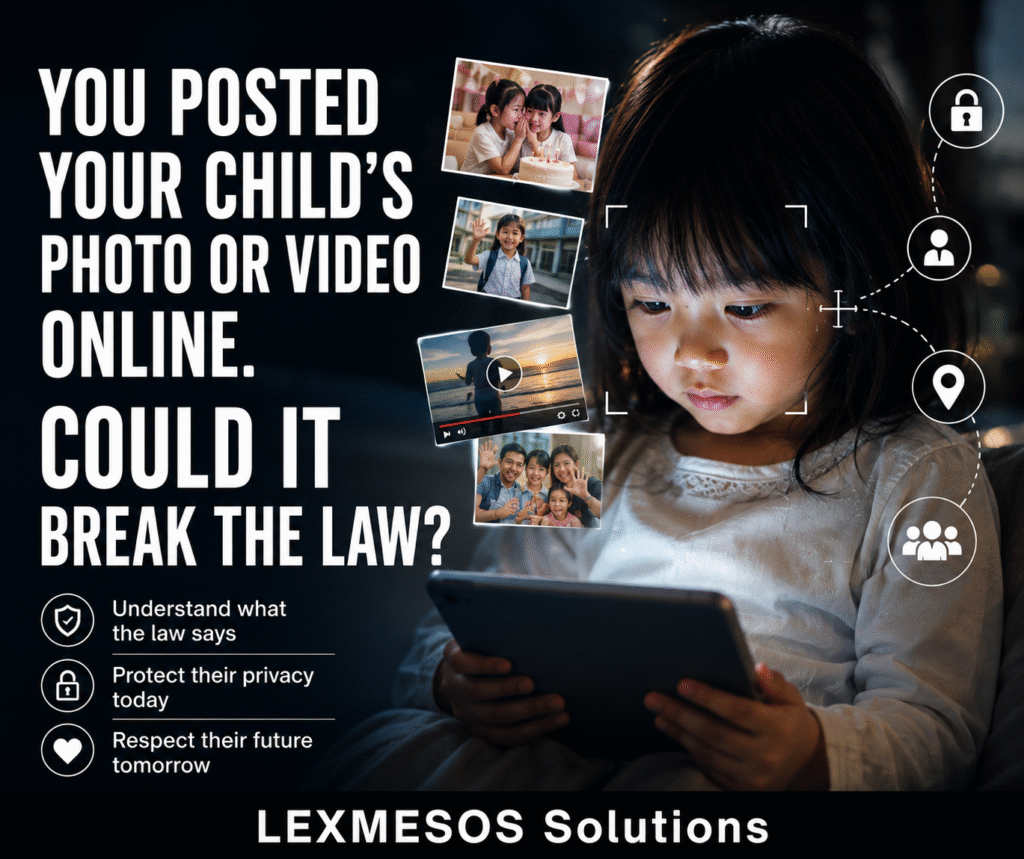
You proudly post your child’s graduation photo.
Their full name is visible.
Their school badge is clearly shown.
Friends congratulate your family.
A few strangers also save the picture.
Have you broken the law?
Many people recently saw headlines saying:
“Exposing children’s identities online is a crime.”
But is it really that simple?
Not quite.
Let’s explain it in plain English.
What does Malaysian law actually say?
In Malaysia, Section 15 of the Child Act 2001 (Act 611) protects the identities of children involved in certain legal proceedings or cases.
In simple terms, if a child is involved in matters such as criminal proceedings, child protection proceedings or appears as a witness, the law generally prohibits publishing information that could identify that child. This may include the child’s name, photograph, school or other details that reveal who the child is. Breaching these restrictions may amount to a criminal offence.
Does this mean you can never post your child’s photo?
No.
This is where many people become confused.
The law above is not a blanket ban on parents posting family photos online.
Instead, it protects children involved in specific legal situations.
For example:
Example 1
A child wins a school sports competition.
Their parents post a family photo on Facebook.
This is generally not what Section 15 is about.
Example 2
A child is the victim of abuse.
Someone uploads the child’s photograph, school name and details about the court case.
This is exactly the type of situation the law aims to prevent.
The purpose is simple:
Protect the child.
Not public curiosity.
But legal doesn’t always mean risk-free
Just because something may be legal does not automatically mean it is the best decision.
Today, one photo can reveal much more than many people realise.
A picture may unintentionally reveal:
- your child’s school
- where they live
- places they visit regularly
- family members
- hobbies
- daily routine
Once shared online, that information can spread far beyond your intended audience.
How does Europe approach this?
The European approach is similar in one important respect:
Children deserve special protection.
However, many European policies go beyond court proceedings.
Under the EU’s child rights and data protection framework, children’s privacy, dignity and personal data receive particular protection, and organisations handling children’s information are expected to apply higher standards because children are considered more vulnerable.
In other words:
Malaysia’s Child Act mainly focuses on protecting children’s identities in specific legal proceedings.
The EU also places strong emphasis on protecting children’s privacy throughout their digital lives, not only when they appear in court.
The underlying principle is the same:
A child’s best interests should come first.
Before you press “Post”
Ask yourself four simple questions:
✓ Would my child still be comfortable with this photo in 15 years?
✓ Does this reveal where my child studies?
✓ Am I sharing this for my child’s benefit or for likes?
✓ If someone copied this photo today, would I be comfortable?
Final thoughts
The law sets the minimum standard.
Responsible parenting often goes further.
Whether you live in Malaysia, Europe or elsewhere, protecting a child’s identity is no longer just about avoiding legal consequences.
It is about respecting their privacy, dignity and future in a world where one post can remain online forever.
Because one day, your child may ask:
“Why did the internet know me before I had the chance to choose?”
Continue Reading
Millions Know Your Child. But Does Your Child Know Why?
Explore how social media, AI and digital footprints are reshaping childhood, and why protecting your child’s privacy starts long before the law becomes involved.
Explore Our Digital Society Articles
Stay informed with practical, easy-to-understand articles on AI, privacy, cybersecurity, online safety and emerging technology.
Keywords: child privacy, posting children’s photos online, posting children’s videos online, Child Act 2001 Malaysia, Section 15 Child Act, children’s identity online, sharenting, social media parenting, children’s digital footprint, online child safety, AI and child privacy, GDPR children, EU child privacy, family social media, protect children’s identity
9 July 2026