 Skip to content

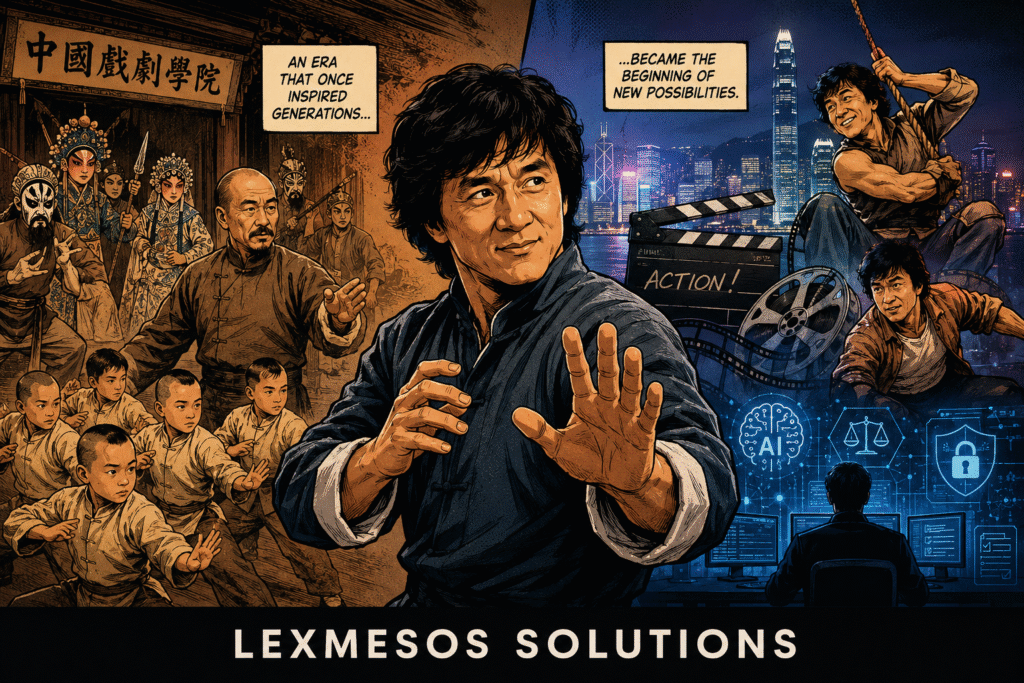
Today, the world knows Jackie Chan as one of the greatest action stars of all time.
But before Hollywood…
Before the blockbuster films…
Before the fame…
An entire way of life was quietly disappearing.
The 1988 Hong Kong film Painted Faces tells the story inspired by the real-life experiences of Master Yu Jim-yuen and his students from the China Drama Academy, including the famous Seven Little Fortunes such as Jackie Chan, Sammo Hung and Yuen Biao.
For decades, traditional Peking Opera performers devoted their lives to mastering martial arts, acrobatics, singing and acting. Their training was demanding, disciplined and often unforgiving.
Then the world changed.
Television became more popular.
Cinema attracted larger audiences.
Traditional opera gradually lost public attention.
People were no longer watching performances the way they once did.
According to the story portrayed in Painted Faces, actress Cheng Pei-pei encouraged Master Yu to look beyond the traditional opera industry and consider new opportunities as entertainment preferences evolved.
Whether dramatised or inspired by real events, the message remains powerful:
Sometimes the world changes before we are ready.
The End Of One Industry Became The Beginning Of Another
Master Yu could have insisted that nothing should change.
He could have continued training performers for a shrinking audience.
Instead, many of his students found new opportunities in Hong Kong’s rapidly growing film industry.
The discipline they learned did not disappear.
It evolved.
Their opera movements became cinematic fight scenes.
Their stage performances became action films.
Their years of training became the foundation of international careers.
Without that transition, the world might never have witnessed the rise of Jackie Chan, Sammo Hung and many of Hong Kong cinema’s legendary action stars.
History Has Always Rewarded Those Who Adapt
Every generation experiences disruption.
The Industrial Revolution transformed manual labour.
Machines changed manufacturing.
Computers changed offices.
The Internet changed communication.
Smartphones changed daily life.
Today, artificial intelligence (AI) is changing how we work once again.
Many people fear AI will replace jobs.
History suggests something more complex.
Technology rarely replaces everyone.
Instead, it changes how people work.
Those who adapt often discover new opportunities.
Those who refuse to adapt risk being left behind.
AI Is Not The First Revolution
Lawyers once relied entirely on physical law libraries.
Accountants manually prepared financial records.
Designers drew everything by hand.
Today, AI assists with legal research, financial analysis, content creation and software development.
The professions still exist.
The tools have changed.
Just as cinema created new opportunities for opera performers, AI is creating new opportunities for professionals willing to learn new skills.
The challenge is not whether change will happen.
It already has.
The real question is whether we choose to adapt.
Businesses Face The Same Choice
Companies are asking similar questions today:
Should they adopt AI?
Should employees be trained?
How should confidential information be protected?
How can organisations balance innovation with compliance?
These questions cannot be ignored.
Businesses that embrace technology without governance expose themselves to legal, cybersecurity and compliance risks.
Businesses that reject technology altogether may struggle to remain competitive.
The answer lies somewhere in between.
Adopt innovation.
Manage the risks.
Build strong governance.
Continue learning.
The Lesson History Keeps Teaching Us
The story behind Painted Faces is not simply about traditional opera.
Nor is it only about Jackie Chan.
It is about recognising when the world has changed.
Every generation believes its disruption is unprecedented.
Yesterday, traditional opera gave way to cinema.
Today, AI is transforming workplaces across almost every industry.
Tomorrow, another technology will emerge.
The tools will continue to change.
Human creativity, resilience and adaptability will remain timeless.
Perhaps that is why Jackie Chan’s story still matters today.
His journey reminds us that success is not only about talent.
Sometimes, it begins with having the courage to embrace a changing world.
Ready For The Next Era?
Every generation faces change. Those who adapt often discover new opportunities, while those who resist risk being left behind.
As AI reshapes industries, organisations need more than innovation, they need strong governance, compliance and risk management to embrace new technologies responsibly.
Explore LexMesos Solutions’ AI Governance & Compliance Support and prepare your organisation for the future.
Keywords: This article explores Jackie Chan, Painted Faces, Master Yu Jim-yuen, the Seven Little Fortunes, traditional Peking Opera, artificial intelligence, workplace transformation, adaptation, innovation, business resilience, digital transformation, AI governance, compliance
This article is provided for general informational purposes only and does not constitute legal advice.
26 June 2026