 Skip to content

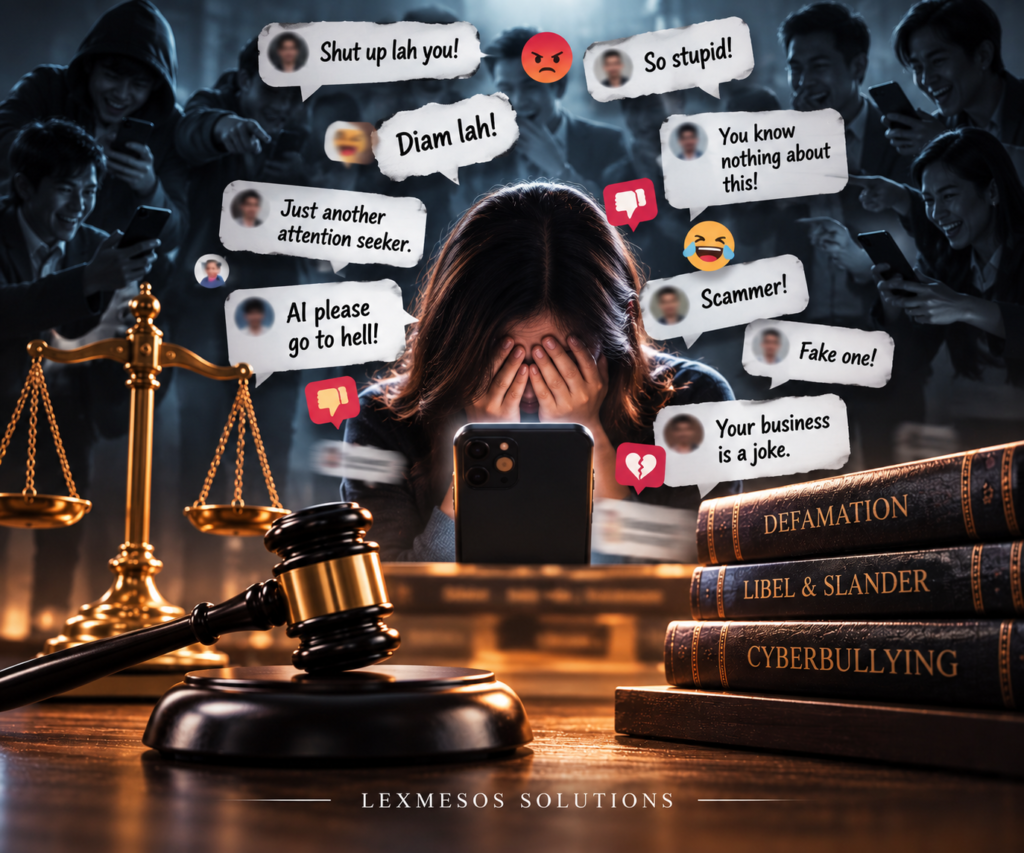
We teach children not to bully. But what happens when adults become the bullies?
“Diamlah” or “shut up.”
“Don’t talk bullshit or nonsense.”
“You know nothing.”
One comment may seem harmless to the person typing it. But behind every screen is a real person, with a reputation, livelihood and dignity.
Social media has given everyone a voice. Unfortunately, it has also given some people the confidence to humiliate strangers, spread rumours and make accusations they would hesitate to repeat face-to-face.
We condemn bullying in schools. So why do we tolerate it among adults?
The Playground Has Changed. The Behaviour Hasn’t.
In our earlier article, Teen Revolution: What Happened to Our Children?, we examined troubling behaviour among young people and the responsibilities of adults.
But bullying does not necessarily disappear when someone graduates from school.
It can follow people into workplaces, neighbourhood disputes and social media comment sections.
Adults may ridicule someone’s intelligence, encourage others to join an online attack, spread humiliating material or repeatedly target a person they dislike.
Children learn from the behaviour adults demonstrate, not merely the values adults preach.
Not every rude comment constitutes cyberbullying. However, repeated targeting, intimidation, threats and deliberate humiliation deserve serious attention.
When Does an Online Comment Become Defamation?
Under Malaysia’s Defamation Act 1957, defamation law protects reputation against certain damaging statements.
Two traditional forms are:
- Libel: Defamatory material published in a permanent form, such as written social media posts, comments or images.
- Slander: Defamatory statements generally communicated through speech or other temporary forms.
For civil defamation, the statement generally must carry a defamatory meaning, refer to the claimant and be published to a third party.
Calling someone foolish is not automatically defamation.
But falsely accusing someone of fraud, dishonesty or criminal misconduct may carry serious legal consequences.
There is a difference between expressing an opinion and presenting an accusation as fact.
Rumours, Scandals and Viral Allegations
A scandal is not, by itself, a separate defamation offence.
Genuine wrongdoing can and should be scrutinised responsibly. But spreading unverified accusations can harm innocent people.
Adding “allegedly” does not automatically protect a publisher. Neither does repeating a rumour simply because it has gone viral.
A thousand shares cannot turn an unverified allegation into the truth.
As explored in One Lie. One Post. One Life Changed Forever, a single false allegation can spread rapidly online, damaging reputations, relationships and livelihoods before the truth has an opportunity to emerge.
The internet may move on to the next controversy, but the person affected may live with the consequences for years.
Two Malaysian Defamation Cases: Different Proceedings, Important Lessons
Recent defamation proceedings involving fashion entrepreneur Christy Ng and Transport Minister Anthony Loke highlight the potential legal consequences of statements published on social media.
The Christy Ng case
Following a default judgment in 2026 over statements published on Threads, the Kuala Lumpur High Court awarded RM180,000 in damages. On 26 October 2026, the court directed the defendant to publish a newspaper apology within four days in connection with an earlier order. (The Sun)
The Anthony Loke case
In separate proceedings, Transport Minister Anthony Loke sued lawyer Ang Woei Shang over allegedly defamatory Facebook videos. Ang denied the allegations and maintained that his remarks constituted fair comment. (New Straits Times)
Unlike the Christy Ng proceedings, the reported lawsuit involving Anthony Loke concerned contested allegations, not an established finding of defamation.
The lesson? Filing a lawsuit does not prove someone committed defamation, and not every offensive remark is legally actionable.
However, publishing damaging allegations without a proper factual basis can expose individuals to serious legal and financial consequences.
Freedom of expression protects legitimate criticism and public discussion. It does not automatically protect defamatory statements.
And while defamation concerns reputation, cyberbullying raises another important question: what happens when adults use social media to intimidate, ridicule or repeatedly humiliate others?
Cyberbullying Is Not Always Defamation
This distinction matters.
A person may repeatedly harass, threaten or humiliate someone online without necessarily publishing a defamatory factual allegation.
Malaysia’s legal framework includes criminal provisions relevant to certain forms of bullying and harassment, including provisions introduced through the Penal Code (Amendment) Act 2025, alongside other potentially applicable laws.
The precise offence depends on the conduct and statutory elements. A rude comment does not automatically amount to a criminal offence.
Likewise, Sections 499 and 500 of the Penal Code address criminal defamation, subject to statutory exceptions and requirements. Civil and criminal proceedings must not be confused.
As explored in Words Are Weapons, words can cause real harm even when they do not meet the legal definition of defamation.
Repeated insults, public humiliation, intimidation and hostile online behaviour can affect a person’s dignity, reputation and emotional well-being.
Not every cruel comment is defamatory. But that does not mean cruelty is harmless or that persistent harassment is necessarily lawful.
Freedom of Expression Comes With Responsibility
Freedom of expression is essential to public discussion.
People must remain free to question institutions, criticise businesses, challenge public figures and expose genuine wrongdoing.
But disagreement does not require humiliation.
Don’t like an article? Scroll past.
Disagree with an argument? Challenge it with evidence.
Believe someone has committed wrongdoing? Verify the facts and consider appropriate reporting channels.
And before posting an accusation, ask yourself whether you could defend it if challenged.
We cannot demand that schools eliminate bullying while treating online cruelty among adults as entertainment.
If adults cannot disagree without humiliating one another, what exactly are we teaching the next generation?
Keywords: Defamation law Malaysia, cyberbullying Malaysia, libel and slander, Defamation Act 1957, online defamation, adult cyberbullying, social media harassment, criminal defamation Malaysia, Penal Code Section 499, Penal Code Section 500, freedom of expression Malaysia, online accusations, toxic social media behaviour, Christy Ng defamation case, Anthony Loke defamation lawsuit, legal consequences of social media comments, online reputation protection, Malaysian cyberbullying laws
Disclaimer: This article is for general public awareness and does not constitute legal advice. Whether conduct amounts to defamation, harassment or another offence depends on the facts and applicable law.
26 October 2026